Beyond the Lab Coat: Celebrating LGBT+ Brilliance in Science and Innovation!
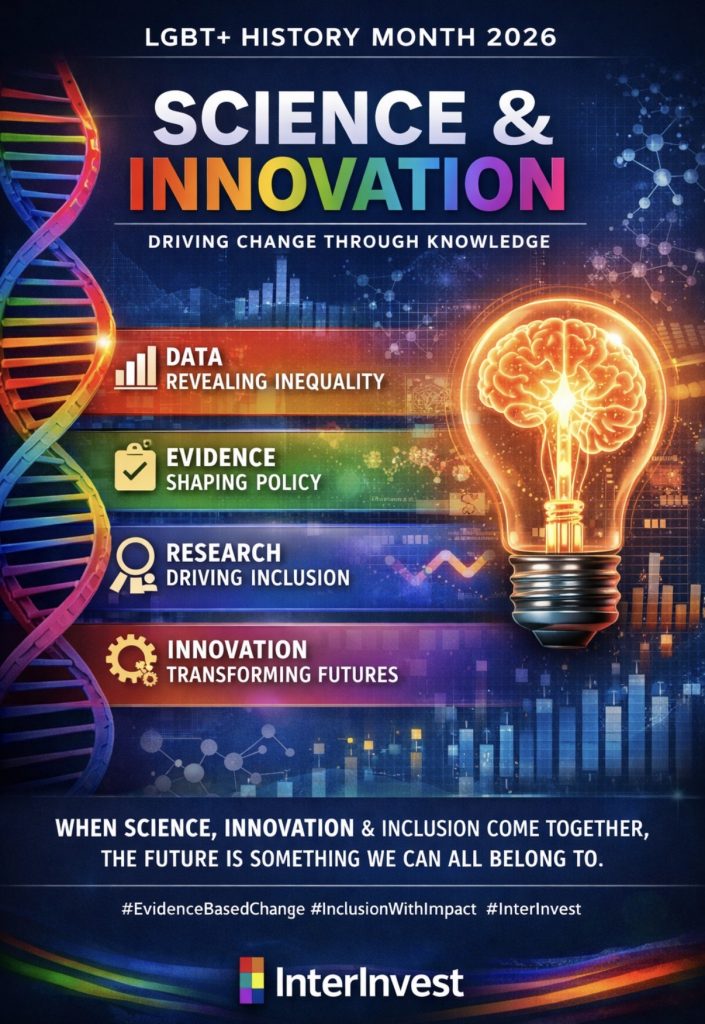
LGBT+ History Month 2026
This February marks the 22nd UK LGBT+ History Month, and the 2026 theme of Science and Innovation arrives at a crucial moment. As we navigate global challenges from climate change to healthcare accessibility, it’s time to recognise a truth often hidden in textbooks and boardrooms: LGBT+ scientists and innovators have been at the forefront of discoveries that shape our daily lives.
The Hidden Figures of Progress
History has a habit of editing out what makes us uncomfortable. Behind every breakthrough that we take for granted, from the computer you’re reading this on to the medicines that save lives, are stories of LGBT+ individuals whose brilliance was acknowledged whilst their identities were erased, or worse, criminalised.
Alan Turing’s story stands as the most famous example of this tragic erasure: the mathematician whose work was instrumental in the war effort and underpins modern computing was medically castrated by the state. His genius gave us the foundations of artificial intelligence and modern technology. The state’s gratitude was persecution.
But Turing wasn’t alone. The 2026 LGBT+ History Month highlights five remarkable figures whose contributions demand recognition:
Barbara Burford – A medical researcher who didn’t just advance healthcare but revolutionised how the NHS thinks about equality and diversity, establishing guidelines that protect marginalised patients and staff today.
Charles Beyer – A locomotive engineer and founding member of the Institute of Mechanical Engineers who helped drive the industrial revolution that transformed Britain.
Elke Mackenzie – A botanist who researched lichens in Antarctica, pushing the boundaries of our understanding in one of Earth’s most extreme environments.
Jemma Redmond – A biotechnologist developing 3D bioprinters to create tissues and organs, working at the cutting edge of regenerative medicine that could save countless lives.
Robert Boyle – A founder of modern chemistry and the modern scientific method itself, laying the groundwork for centuries of discovery.
Why Science Needs Diversity
Diverse teams are essential for the development of solutions which benefit everyone, yet naming LGBT+ scientists and innovators remains a challenge for most people. This isn’t accidental, it’s the result of systematic erasure and ongoing discrimination.
37% of LGBTQ+ respondents said they had experienced discrimination by someone else’s behaviour, attitudes or language while exercising or trying to exercise, and the statistics in STEM fields paint an even starker picture. When talented individuals face hostility, microaggressions, or feel compelled to hide their authentic selves, science loses.
Innovation thrives on diverse perspectives. Different lived experiences lead to different questions being asked, different problems being prioritised, and different solutions being imagined. When we exclude LGBT+ voices from laboratories, engineering firms, and tech companies, we limit our collective potential to solve the challenges we face.
The Science That Erased Us, And How Science Can Liberate
LGBTQ+ people have had a complicated relationship with science, technology and medicine, which have historically been tools with which to construct queer lives and identities as aberrant or abnormal, and in need of medical intervention. From conversion therapy to pathologisation, science has been weaponised against LGBT+ communities.
Yet science also evolves. It asks better questions. It collects different data. The same rigorous methodology that once classified homosexuality as a mental illness now provides the evidence base for LGBT+ rights, demonstrates the harm of discrimination, and proves that diversity strengthens organisations and communities.
While reflecting on the past, this year’s theme highlights how data, evidence and research can help us push for progress, drive transformative change and help reform practices now. Using credible data to inform decisions is crucial for creating meaningful and lasting impact.
A Moment of Turbulence
Despite the progress made towards LGBTQ+ equality throughout history, and with the current shift in anti-LGBTQ+ feeling across the world, the fight for equality is far from over. Globally, we are in the midst of a cultural backlash and moral panic. It is a time of regressive laws, curtailing freedoms and the rise of populist movements.
Hard-won rights, from marriage equality to anti-discrimination protections are under attack. Young LGBT+ people, particularly trans youth, face hostile political rhetoric and legislative efforts to restrict their access to healthcare and participation in public life. In this climate, LGBT+ History Month becomes more than celebration, it’s an act of resistance and resilience.
Remembering our scientific pioneers reminds us that LGBT+ people have always existed, have always contributed, and have always deserved dignity and respect. When politicians claim that LGBT+ identities are modern inventions or threats to society, history tells a different story.
What We Can Do
LGBT+ History Month isn’t just for LGBT+ people, it’s for everyone who benefits from science, innovation, and progress. Here’s how organisations can mark this month meaningfully:
In the Workplace:
- Host learning sessions on LGBT+ contributions to your industry
- Review your equality, diversity and inclusion policies, are they protecting LGBT+ staff?
- Audit your hiring and promotion practices for hidden bias
- Create visible allyship programmes and resource groups
In Education:
- Integrate LGBT+ scientists and innovators into curriculum throughout the year
- Ensure libraries and resources represent diverse identities and experiences
- Challenge stereotypes about who can be a scientist or innovator
- Create safe spaces where LGBT+ students can see themselves in STEM
For Individuals:
- Educate yourself about LGBT+ history beyond the headlines
- Support LGBT+ charities and organisations doing vital work
- Speak up when you witness discrimination
- Use your platform, however small, to amplify LGBT+ voices
Looking Forward
As we celebrate Science and Innovation this February, we honour those who came before whilst recognising those leading us forward. From climate scientists developing sustainable technologies to medical researchers advancing treatments, from data scientists fighting algorithmic bias to engineers designing inclusive products, LGBT+ innovators are shaping our future.
But celebration without action rings hollow. LGBT+ History Month challenges us to ask uncomfortable questions: Who is missing from our teams? Whose contributions are we failing to recognise? What barriers are we maintaining, consciously or not?
The answers matter. Not just for LGBT+ individuals who deserve to bring their whole selves to work, education, and public life. But for all of us who benefit when diverse minds collaborate to solve our most pressing challenges.
This February, let’s commit to more than remembering. Let’s commit to change. Because the innovations we need tomorrow depend on the inclusion we choose today.
About LGBT+ History Month
Founded in 2005 by Schools OUT UK following the repeal of Section 28, LGBT+ History Month is celebrated every February across the UK. It aims to claim our past, celebrate our present, and create our future by raising awareness of LGBT+ history, lives, and experiences.
Resources:
- Schools OUT UK: lgbtplushistorymonth.co.uk
- Stonewall UK: stonewall.org.uk
- LGBT Foundation: lgbt.foundation
- Galop (Anti-abuse charity): galop.org.uk
Get Involved: Register your organisation’s LGBT+ History Month activities at lgbtplushistorymonth.co.uk to receive resources, webinar notifications, and connect with others marking this important month.